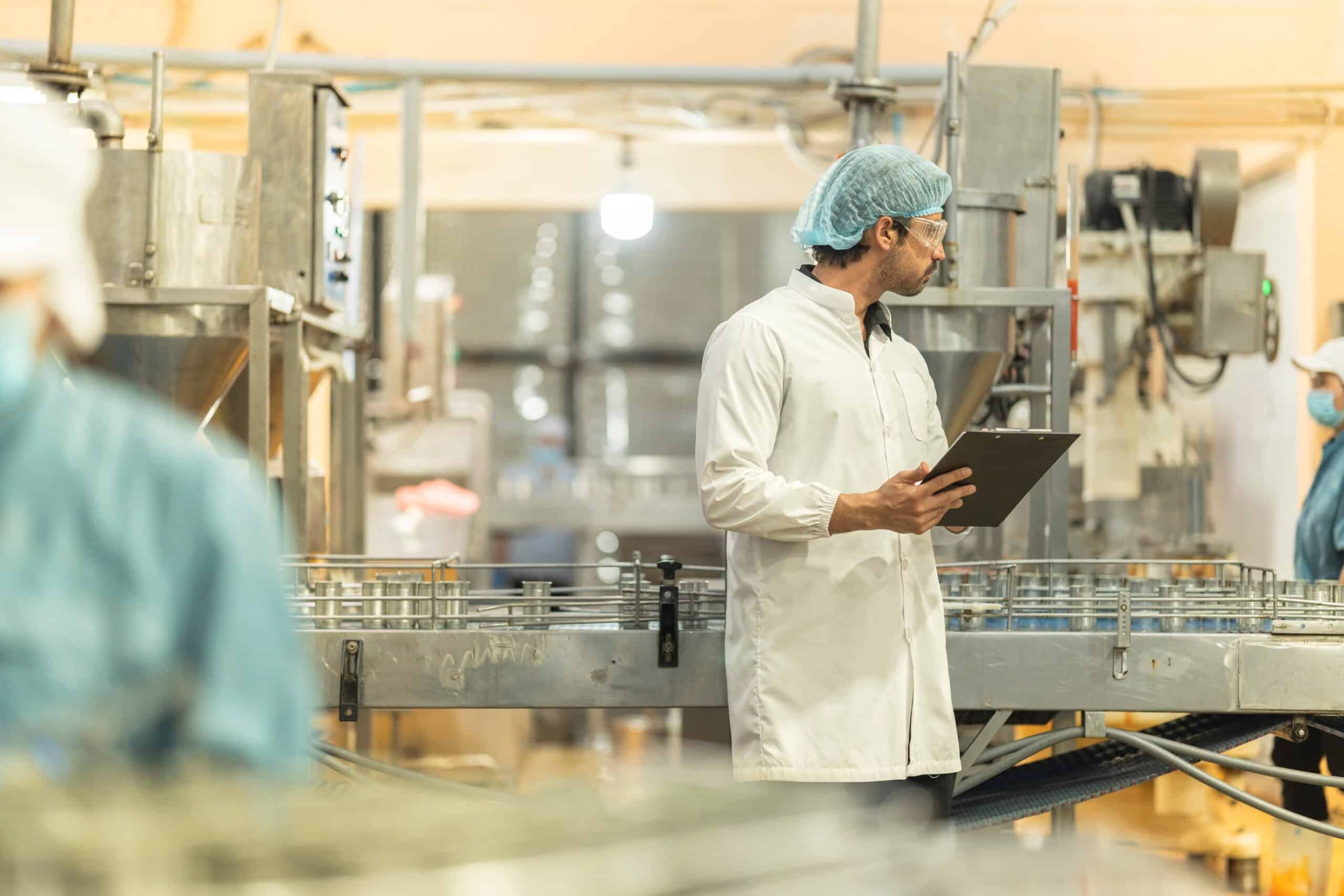

The food industry is under growing pressure to meet complex safety standards, respond quickly to risks, and provide full transparency to customers and regulators. Consequently, the future of food safety rests in the smart application of technology.
From digitised BRCGS audit readiness to real-time monitoring and risk-based decision-making, technology is reshaping how food businesses operate. In this blog, we explore the most impactful innovations and how Food Safety Assist helps businesses make the switch.
BRCGS/Customer Audits in the Digital Age
BRCGS Global Standards are placing greater emphasis on digital data, traceability and evidence-based decision-making. Auditors continually expect food businesses to demonstrate real-time visibility and robust record keeping.
What Can Go Wrong:
- Paper-based systems can become disorderly or patchy during audits.
- Staff struggle to find key records quickly.
- Manual processes result in missing data, raising non-conformances.
Solution:
Digital systems allow automatic logging, instant searchability and full audit trails, so reducing stress and improving confidence during BRCGS assessments and customer audits.
Food Safety Assist tip: Our team helps clients transition from paper to digital BRCGS-compliant systems. We can design tailored checklists, forms and dashboards suited to your processes.
Strengthening Traceability with Technology
Traceability is key to product safety and being recall ready. With complex supply chains, food businesses need fast and accurate access to supplier, ingredient and process data.
What Can Go Wrong:
- Incomplete batch records delay recalls.
- Inconsistent supplier data creates traceability gaps.
- Manual records are prone to errors and loss.
Solution:
Digital traceability systems track goods from intake to dispatch, allowing one-click batch tracing and real-time product status.
Ensuring Data Integrity and Compliance
Data integrity means that records are complete, consistent and accurate. This is a core requirement of both food law and certification schemes.
What Can Go Wrong:
- Records can be backdated or changed with no audit trail.
- Staff complete checks hours after the event.
- Auditors question the reliability of records.
Solution:
Automated data capture and digital time stamping reduce human error and build trust with customers, inspectors and certification bodies.
Real-Time Monitoring: Preventing Problems Before They Escalate
Rather than identifying food safety issues after the fact, real-time monitoring allows teams to take preventive action instantly.
Applications include:
- Temperature checks for cold storage and cooking
- Clean-in-place (CIP) system monitoring
- Real-time allergen and label control and product changeovers
What can go wrong:
- Slow responses can lead to unsafe products reaching customers.
- Manual checks miss deviations.
- Inconsistent monitoring practices across shifts.
Solution:
IoT sensors and connected devices can alert staff to issues as they happen, supporting more consistent and proactive food safety management.
Automation and Efficiency Gains
Routine food safety checks often take up valuable time, particularly in high-volume production environments.
What Can Go Wrong:
- Staff lose time on repetitive documentation.
- Checks become “tick-box” exercises.
- Non-value-adding tasks reduce productivity.
Solution:
Automated systems streamline daily checks, freeing up staff to focus on critical thinking and oversight.
Risk-Based Thinking and Smarter Decision-Making
UK regulators and certification schemes are shifting towards risk-based thinking, where businesses use data and insight to target the highest-risk areas.
What Can Go Wrong:
- Businesses treat all hazards equally, wasting time on low-risk issues.
- Lack of data leads to reactive decision-making.
- Missed trends in complaints or non-conformances.
Solution:
Digital platforms can collect, visualise and analyse food safety data, helping managers to prioritise effectively and allocate resources wisely.
How Food Safety Assist Can Help You Go Digital
We understand that switching from paper to digital systems can feel overwhelming, but you don’t have to do it alone. At Food Safety Assist, we have a dedicated consultant working with clients to:
- Assess your current paper-based systems
- Recommend tailored digital solutions
- Design and implement digital systems for audits, traceability, monitoring, hygiene, etc.
- Train your team to use new systems confidently
Whether you’re working towards BRCGS or SALSA or simply want to modernise your food safety practices, we’re here to support your digital transformation.
Final Thoughts
Technology and innovation aren’t just buzzwords, they’re practical tools that can make food safety more robust, efficient and reliable. Businesses that embrace digital solutions today will be better prepared for the challenges (and opportunities) of tomorrow.
Ready to Digitise Your Food Safety Systems?
Get in touch with Food Safety Assist and take the first step toward smarter, safer operations.